Best AI Lead Generation Software: 8 Platforms
Compare AI lead generation software for service-business chats, B2B prospecting, contact data, and outreach. See which platform fits your team.

Most AI lead generation software is built for outbound sales teams. But if your business gets leads through WhatsApp, Instagram, or website chat, the best fit may be a tool that handles those conversations first. Here are eight platforms, with CXWizard first for service businesses that need to qualify enquiries and book next steps.
We analyzed 58 reviews and comments from Trustpilot and YouTube about AI lead generation software and found that 28% mentioned unreliable and difficult to use platforms.
Table of Contents
- CXWizard
- Apollo.io: B2B prospecting from search to sequence
- Leadsforge: AI-powered contact search and waterfall enrichment
- ZoomInfo GTM Workspace: Enterprise go-to-market data
- Cognism: Phone-verified contacts and compliance focus
- Smartlead: Sales engagement sequencer with add-ons
- ZINQ: Conversational AI for lead qualification and booking
- WhatChimp: WhatsApp marketing, chatbots, and team inbox
- AI Lead Generation Software Compared: Best Fit by Use Case
- Frequently Asked Questions
- Conclusion
1. CXWizard
CXWizard is an agentic AI customer support and sales platform for service businesses. Its AI agents answer customer questions, qualify leads, follow up, book appointments, and hand off to a person when needed. Your team can manage those interactions in a shared inbox across WhatsApp, Instagram DMs, and website chat.
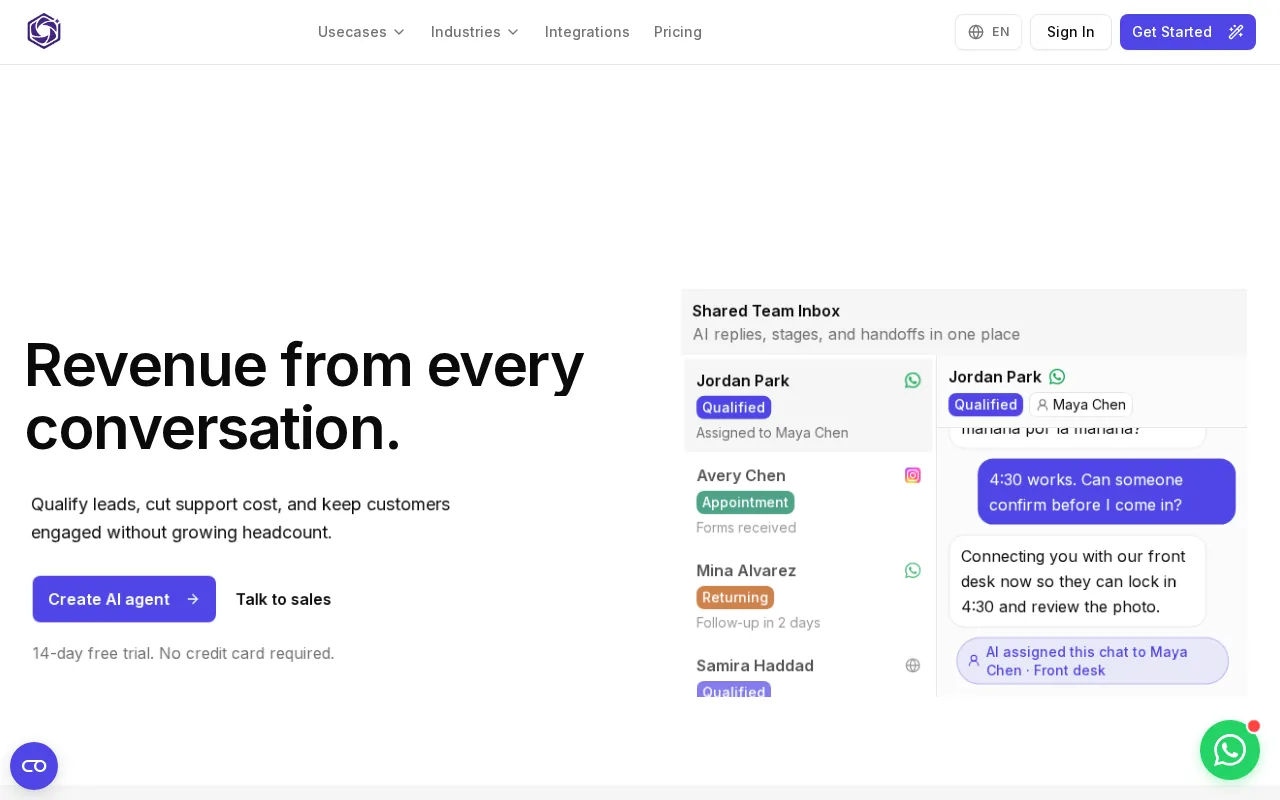
That setup fits businesses where a lead often starts with a quick question: a clinic visitor asks about an appointment, a home services prospect shares a job detail, or a study-abroad enquiry needs a first round of questions answered. Instead of pushing every visitor into a form, the agent can hold the conversation and gather useful details before a staff member steps in.
Qualification happens during the chat. That matters when your team needs context before it follows up, such as the service a person wants or whether they’re ready to book. CXWizard can connect a scheduling tool so customers can book directly in chat. If a question needs human judgment, the conversation can move to a person with the shared inbox as the work hub.
Service teams can also qualify leads across WhatsApp, Instagram, and web chat while keeping the conversation in the channel a customer chose. That’s a different job from building lists of cold prospects. CXWizard is a strong fit when your leads already reach out and fast, useful replies can move them toward a booking.
CXWizard includes a 14-day free trial with no credit card required. Plans include Hobby at $40 per month, Starter at $100, and Pro at $290, with Enterprise also available. The trial includes access to Starter plan features. Check which plan’s monthly conversation limits suit your expected volume before you switch on optional usage-based billing.
Key Takeaway: Choose CXWizard when lead capture begins with a customer conversation, not a cold prospect list.
2. Apollo.io: B2B prospecting from search to sequence
Apollo.io is a B2B prospecting platform that combines contact search, lead scoring, and outreach. It’s a fit for RevOps and growth teams that want to move from finding prospects to starting a sequence without exporting a list between steps.
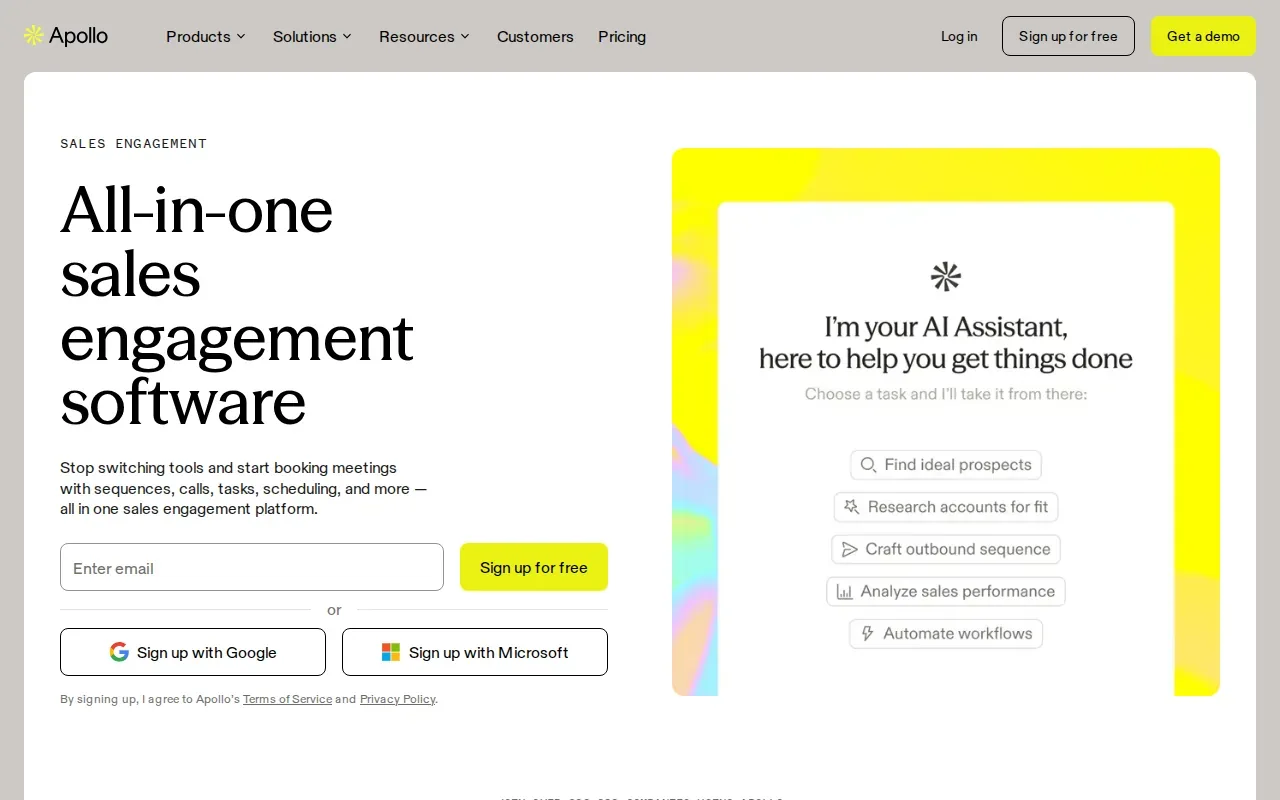
Teams can narrow searches by contact details and other attributes, then use AI-powered lead scoring to prioritize prospects based on CRM and database data. Intent signals can help sales reps time outreach, while website visitor tracking can surface companies visiting a site.
The workflow is the main draw: search, score, then start a sequence in the same system. Apollo describes outreach through automated and manual touchpoints, including email and cold calls. Its free Chrome extension can show prospect data while you browse, including in HubSpot, Salesforce, Gmail, and company websites. Apollo also says it integrates with Salesforce, HubSpot, Outreach, and Pipedrive.
Apollo’s 14-day trial gives a team a defined window to test search quality and sequence fit. For a fair test, use a small segment of your existing ideal-customer profile. Check whether the results match your target roles, then review how lead scores line up with the prospects your reps would actually contact.
One detail to keep in mind: a score is a sorting aid, not proof that someone is ready to buy. Agree on what makes a lead worth a rep’s time, and compare those rules with the signals Apollo uses. That keeps automated prioritization tied to your sales process instead of treating every high score as a sure thing.
3. Leadsforge: AI-powered contact search and waterfall enrichment
Leadsforge is an AI lead search engine built on a database of more than 500 million contacts. It suits teams that already have a target profile or a partial list and need to find or enrich contact records for outbound work.
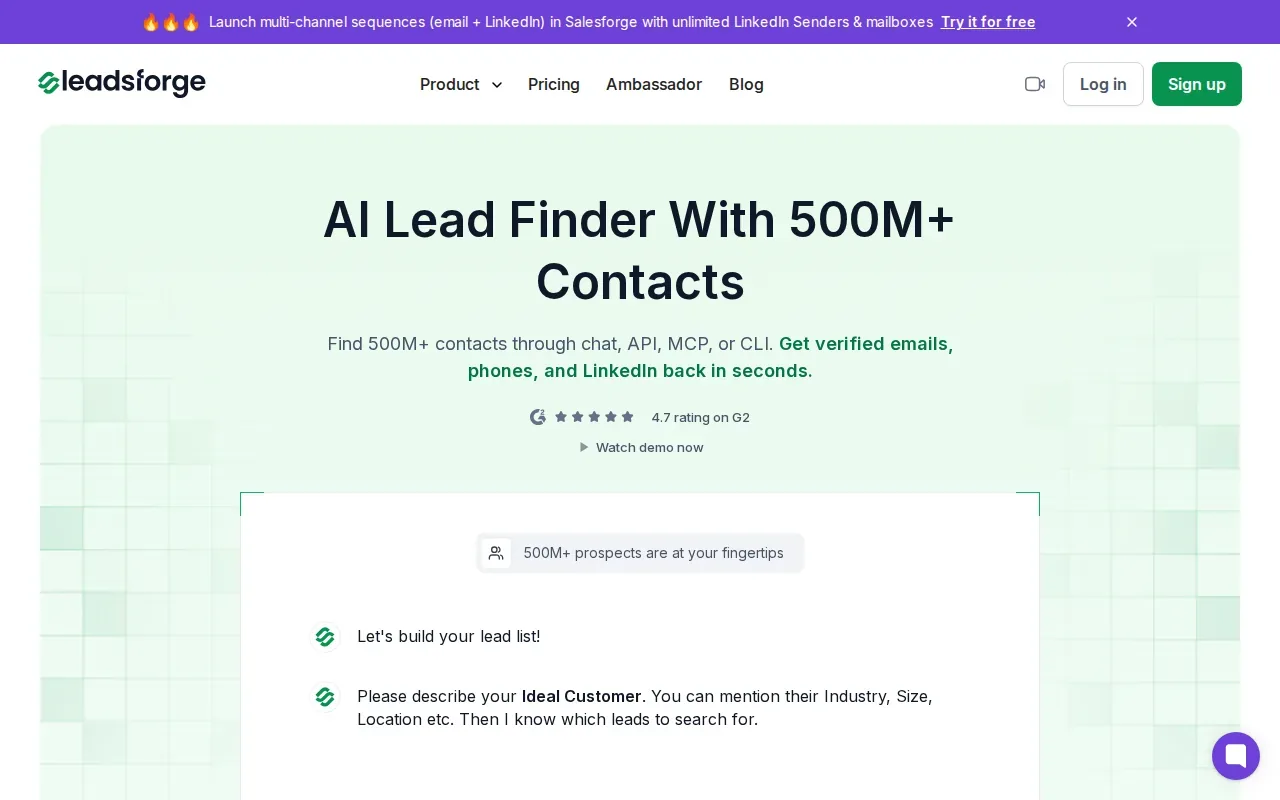
Its enrichment process checks a lead list across more than 20 data providers in a waterfall. If one provider doesn’t return verified data, the next provider is checked automatically. That approach can help fill contact gaps before a team spends time writing outreach, though you’ll still want to test a sample against your own data standards.
Leadsforge supports prospect searches by ideal customer profile, list enrichment, competitor followers, and buying signals. It also provides an API and ways to search from Claude or ChatGPT through an MCP server, plus command-line enrichment. Those options may suit teams that want to add contact lookup to an existing workflow rather than manage every search by hand.
For CRM use, Leadsforge integrates with Salesforce and HubSpot. It also connects with Forge Stack, including Salesforge, for an outbound workflow. The credit model charges per verified result rather than per seat, and unused credits don’t expire. New signups get 100 free credits without a card, which gives a team a way to test result quality before it uses the tool at scale.
Before adding it to your process, decide which fields must be present for a contact to count as usable. For example, a team might require a verified email before a prospect enters an email sequence. That simple rule makes it easier to judge whether enrichment is saving time or sending weak records downstream.
4. ZoomInfo GTM Workspace: Enterprise go-to-market data
ZoomInfo, now sold as GTM Workspace, is the enterprise end of this market. It’s aimed at larger go-to-market teams that want account signals, CRM data, and company intelligence connected in a shared workspace.
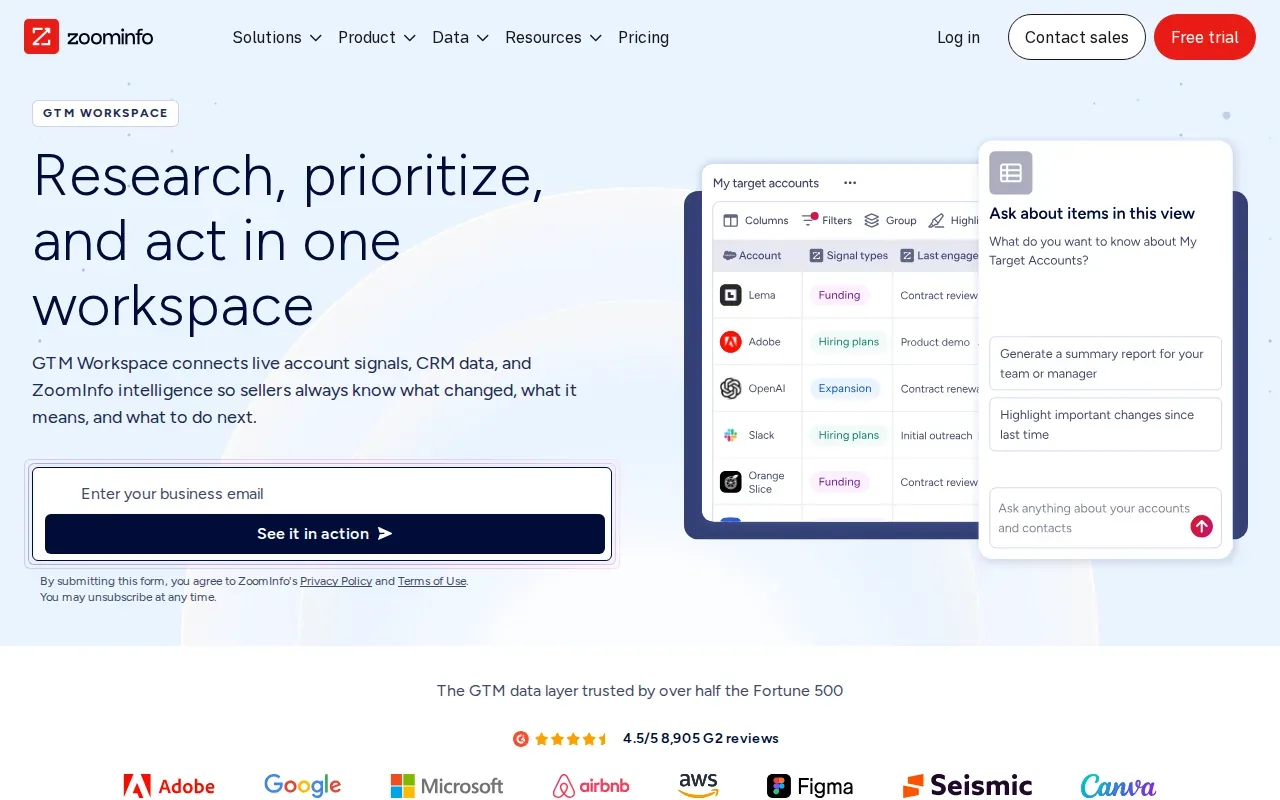
The workspace is built to help sellers see what changed at an account, what that change means, and what action to take. Its areas include prospecting and pipeline, account-based marketing, deal execution, data enrichment, customer expansion, lead management, and conversation intelligence. For a large team, that breadth can support a shared account view across sales and related functions.
GTM Workspace is sold as a set of modules that can include the core data purchase, outreach, and enrichment, so it is worth mapping the features your team will use to the modules you plan to buy. A sales group that only needs contact data may have different needs from one that wants data, enrichment, and outreach together.
ZoomInfo is best suited to teams with a defined go-to-market process and people who can own CRM data quality. Before adoption, map the account fields that should sync and name who handles duplicates or conflicting records. That work can prevent a large data purchase from adding more noise to a CRM that already needs cleanup.
For outbound teams selling in the UK and Europe, verified mobile numbers and a defensible compliance story matter. Treat privacy review as part of the rollout, not a final checkbox. Your team should confirm how contact data will be used and who can access it before the wider group starts prospecting.
5. Cognism: Phone-verified contacts and compliance focus
Cognism is a B2B contact database built around phone-verified mobile numbers and GDPR compliance. It’s a fit for teams that rely on phone outreach and want contact data with a clear compliance focus.
Its strongest fit is not every lead-generation workflow. A business that mainly gets enquiries through chat may need a different kind of qualification tool. But for a sales team with a target account list that needs contact details, Cognism’s phone-verified mobile focus gives the team a specific reason to assess it.
Cognism’s Pro tier includes intent data for lead qualification. That gives teams another signal to consider when deciding which accounts to pursue, but intent data should sit alongside fit and context. A prospect showing a buying signal may still fall outside your market or lack the right role.
The integrations include CRM Enrichment and Data-as-a-Service. Those are relevant when the main task is improving contact records in a CRM or connecting data to another workflow. If you already have a list and want email and LinkedIn activity running from one sequence, compare that workflow with your current engagement tools before choosing Cognism as the central system.
For setup, agree on the fields your team will use and how a rep should record an outreach outcome. Then check whether the data workflow supports those rules. Compliance is part of the buying decision here, especially if your team works with contacts in regions that have privacy requirements.
6. Smartlead: Sales engagement sequencer with add-ons
Smartlead starts with a sales engagement sequencer, then lets teams add other pieces as needed. It’s a fit for outbound teams that want cold email at the center of their process and prefer to build around that core over time.
Smartlead’s services include a lead database, dedicated servers, client workspaces, inbox testing, mailboxes, and domains. These functions address the work around sending campaigns, not just the writing of the message itself.
Smartlead describes AI agents that can research leads, write personalized emails, update a CRM, and help manage deliverability. Its shared inbox brings campaign replies together, while an AI reply manager can prioritize hot leads and trigger next steps. For teams handling many campaigns, keeping replies in one place can make it easier to see which conversations need a person now.
Smartlead also offers a call workflow, with email and calls handled from a shared dashboard. That may appeal to outbound teams that mix channels. The key setup question is how much of that broader stack your team needs today, since Smartlead’s model begins with the sequencer and adds components separately.
Deliverability needs ongoing attention even when software handles technical tasks. Keep an eye on bounce rates and spam signals, then review the copy and audience when results shift. Teams comparing email inbox placement tools may also find a comparison of email deliverability software useful as a separate part of that review.
If your main issue is missed replies or slow booking after a service enquiry, a cold email sequencer may not be the first tool to fix. Match the core workflow to the way leads reach you.
7. ZINQ: Conversational AI for lead qualification and booking
ZINQ is a conversational AI platform that answers enquiries, qualifies leads, books next steps, and supports customers across channels. It’s a fit for teams that want AI-led conversations to do more than deliver a first reply.
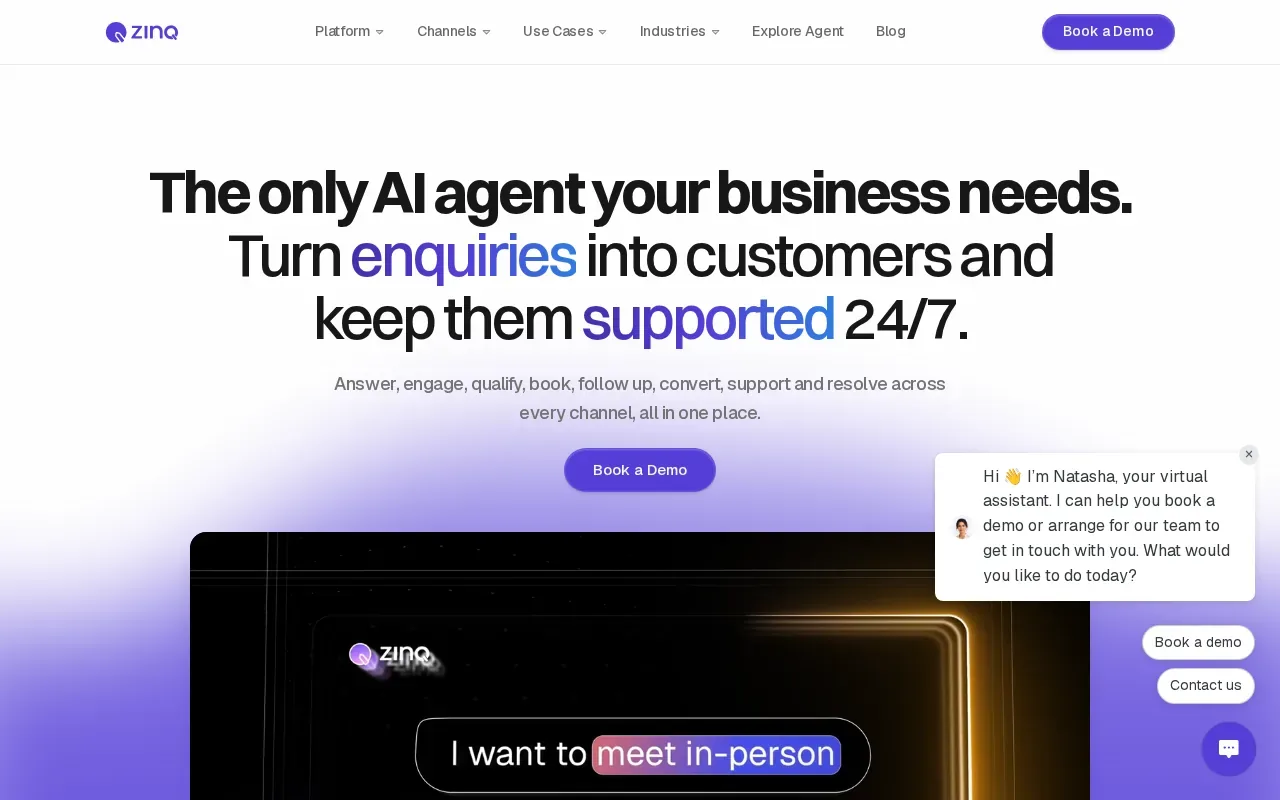
ZINQ can engage enquiries, understand customer intent, answer from approved business knowledge, capture requirements, and qualify leads. It can also book or reschedule appointments, send reminders, follow up, and re-engage inactive leads. A shared omnichannel inbox supports AI and human conversations together.
When a person needs to take over, ZINQ can pass along customer details and conversation context. That handoff matters in service businesses, where a staff member may need to review a request before confirming a booking. It also gives teams a way to keep the AI’s role clear rather than forcing it to handle every case.
ZINQ’s listed channels include WhatsApp, Instagram, web chat, email, and voice. It also lists CRM integration and reporting features. For a team evaluating it, the first test should be whether the answers stay within the business knowledge you approve and whether the handoff gives staff enough context to continue smoothly.
ZINQ provides live online training for teams getting started. That can be useful if your staff need guided help with setup. Before a wider rollout, pick a small set of common enquiry types and agree on the questions that qualify a lead for the next step.
8. WhatChimp: WhatsApp marketing, chatbots, and team inbox
WhatChimp is a WhatsApp marketing platform with bulk messages, chatbots, an AI Agent, and a team inbox. It’s best suited to businesses that want WhatsApp to be a central channel for campaigns and customer conversations.
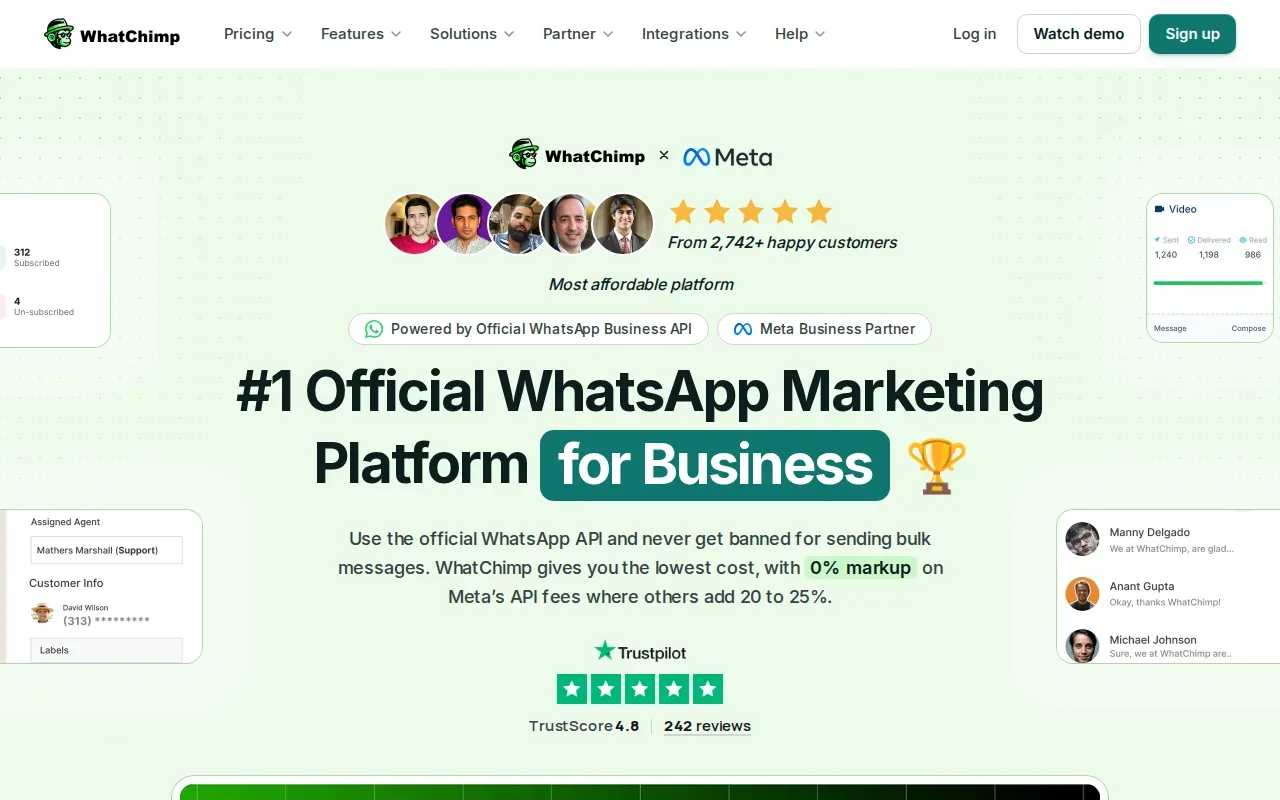
WhatChimp is a Meta Business Partner and is used in more than 90 countries. WhatChimp states that it adds 0% markup to Meta’s API fees. Your total cost still depends on the fees set by Meta and the plan you select, so include both in your budget check.
For lead generation, the useful question is what happens after a person responds to a campaign. A chatbot can guide the conversation, while an AI Agent can help with replies. The shared inbox gives a team a place to manage conversations when a person needs to step in. This can fit a business that gets much of its customer attention through WhatsApp.
WhatsApp-first doesn’t mean every business should send more messages. Set a clear reason for each campaign and make sure people have agreed to receive the messages you send. Keep an eye on replies and opt-outs as you assess whether the channel is producing conversations your team can handle.
If you depend on local search as well as messaging, lead capture starts before a chat begins. A separate resource on Google Business Profile lead generation tactics covers ways to bring more local prospects to your business listing.
AI Lead Generation Software Compared: Best Fit by Use Case
These platforms solve different parts of lead generation. CXWizard and ZINQ focus on conversations. Apollo.io and Leadsforge focus on B2B prospecting and contact data. ZoomInfo GTM Workspace supports broader enterprise go-to-market work, while Cognism centers on contact data with a phone and compliance focus. Smartlead is built around outbound sequencing, and WhatChimp centers on WhatsApp.
| Platform | Best fit | Where it helps | Check before rollout |
|---|---|---|---|
| CXWizard | Service businesses | Qualify chat enquiries and book appointments | Channel and monthly conversation fit |
| Apollo.io | B2B outbound teams | Search, score, and start sequences | Lead score fit with your sales rules |
| Leadsforge | Teams enriching prospect lists | Search and waterfall enrichment | Verified fields and credit use |
| ZoomInfo GTM Workspace | Enterprise go-to-market teams | Account signals and data workflows | Modules, CRM ownership, and privacy review |
| Cognism | Phone-led B2B prospecting | Phone-verified contact data | Fit with your sequence and CRM process |
| Smartlead | Cold email teams | Sequences and inbox management | Which add-ons you need |
| ZINQ | Teams qualifying inbound chats | Conversation handling and booking | Approved knowledge and handoff rules |
| WhatChimp | WhatsApp-led marketing | Campaigns, chatbot replies, and team inbox | Consent and Meta API fees |
For a service business, CXWizard is the closest match when prospects already message you and the next step is qualification or booking. You can review CXWizard use cases for customer conversations against the types of enquiries your team handles each day. For outbound teams, start with the task that slows you down most: finding contacts, enriching records, or following up.
Pro Tip: Test a platform with one real workflow, such as a chat enquiry that needs an appointment or a prospect list that needs verified email data. Track the time to a qualified next step, not just the number of records or messages handled.
Frequently Asked Questions
What does AI lead generation software do?
AI lead generation software helps teams find or respond to potential customers, then move suitable leads toward a sales conversation or booking. Some tools focus on prospect databases and outbound sequences. Others handle inbound chats, answer questions, qualify people, and hand conversations to staff. Choose based on where your leads begin and what needs to happen next.
Which AI lead generation tool is best for a service business?
CXWizard is a strong fit for service businesses that get enquiries on WhatsApp, Instagram DMs, or website chat. Its AI agents can answer, qualify, follow up, book appointments, and hand off to a person through a shared team inbox. If your team mainly builds cold B2B prospect lists, a prospecting platform may fit better.
Can AI qualify leads and book appointments?
Yes. CXWizard and ZINQ describe conversational AI that can qualify enquiries and book next steps. The exact workflow depends on the questions you want the agent to ask and the way your team handles handoffs. Set clear qualification rules, approve the knowledge the AI can use, and test the booking path before you send more traffic to it.
What’s the difference between prospecting software and conversational AI?
Prospecting software helps you find and contact people who may fit your target market. Conversational AI responds to people who are already interacting with your business. Apollo.io and Leadsforge focus on prospect search or enrichment. CXWizard and ZINQ focus on live enquiries, qualification, and next steps through conversations.
How should a small team measure lead generation software?
Track the outcome that matters to your sales process. For inbound chat, measure how many enquiries reach a qualified handoff or booking. For outbound, review whether contact data is usable and whether reps complete the planned follow-up. Compare those results with the time your team spends on the task, then keep or change the workflow based on the result.
Conclusion
If your service business wins customers through chat, start with CXWizard and test one enquiry-to-booking workflow during its 14-day free trial. Your next step is to connect the channel your customers use most, set the questions that qualify a lead, and review how the handoff works for your team.